
Systems Insight Press mark

Systems that deserve to be understood precisely

An independent imprint publishing work on systems thinking, engineering discipline, and the architecture of transformation — across technology and human experience.

Explore the books

Three books. One inquiry.

A loose trilogy exploring how systems evolve, fail, and are rebuilt — and how untested conclusions become structural constraints.

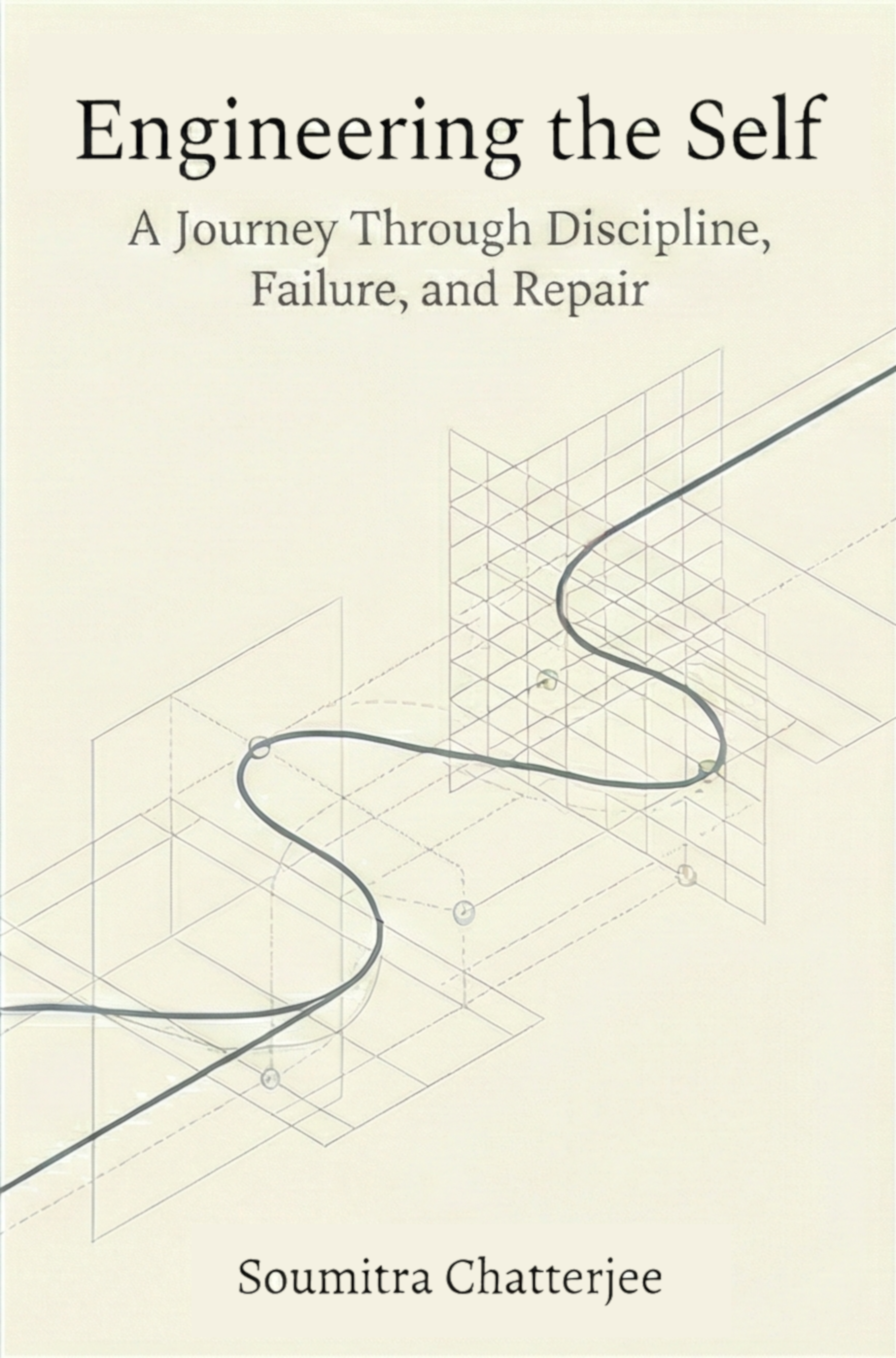
Cover of Engineering the Self by Soumitra Chatterjee

Personal Systems

Engineering the Self

Engineering the Self is not a fitness book. It is not a motivational memoir. And it is not another guide that tells you to “try harder.”

It is the story of a system that appeared functional from the outside — disciplined, compliant, consistent — yet kept producing incoherent results. Told through the lens of systems engineering, this book chronicles a multi-year personal transformation that defied conventional explanations.

Despite near-perfect execution of diet, training, and discipline, progress stalled. Metrics contradicted reality. Effort stopped scaling. The logs looked clean. But the system behaved as if something deeper was broken.

The breakthrough came not from pushing harder, but from diagnosing the architecture itself. At the core of this story is a realization most self-improvement narratives miss: when a low-level subsystem is compromised, no amount of effort at the surface can compensate. In this case, the silent fault lived at the firmware level — quietly sabotaging metabolism, recovery, fat distribution, and emotional stability for years without triggering obvious alarms.

Once that fault was addressed, everything upstream began to change. Not explosively. Not magically. But coherently. Energy stabilized. Recovery scaled. Metrics stopped lying. The body stopped fighting discipline.

More than a personal journey, Engineering the Self offers a transferable framework for understanding human transformation as a system rebuild:

Inputs → Processes → Subsystems → Drivers → Metrics → Outputs

Readers learn why “doing everything right” can still fail — and how to recognize when the real problem is not motivation, nutrition, or willpower, but architecture. Written with precision, humility, and intellectual honesty, this book is for anyone who has ever asked:

“Why isn’t this working — when I’m doing everything right?”
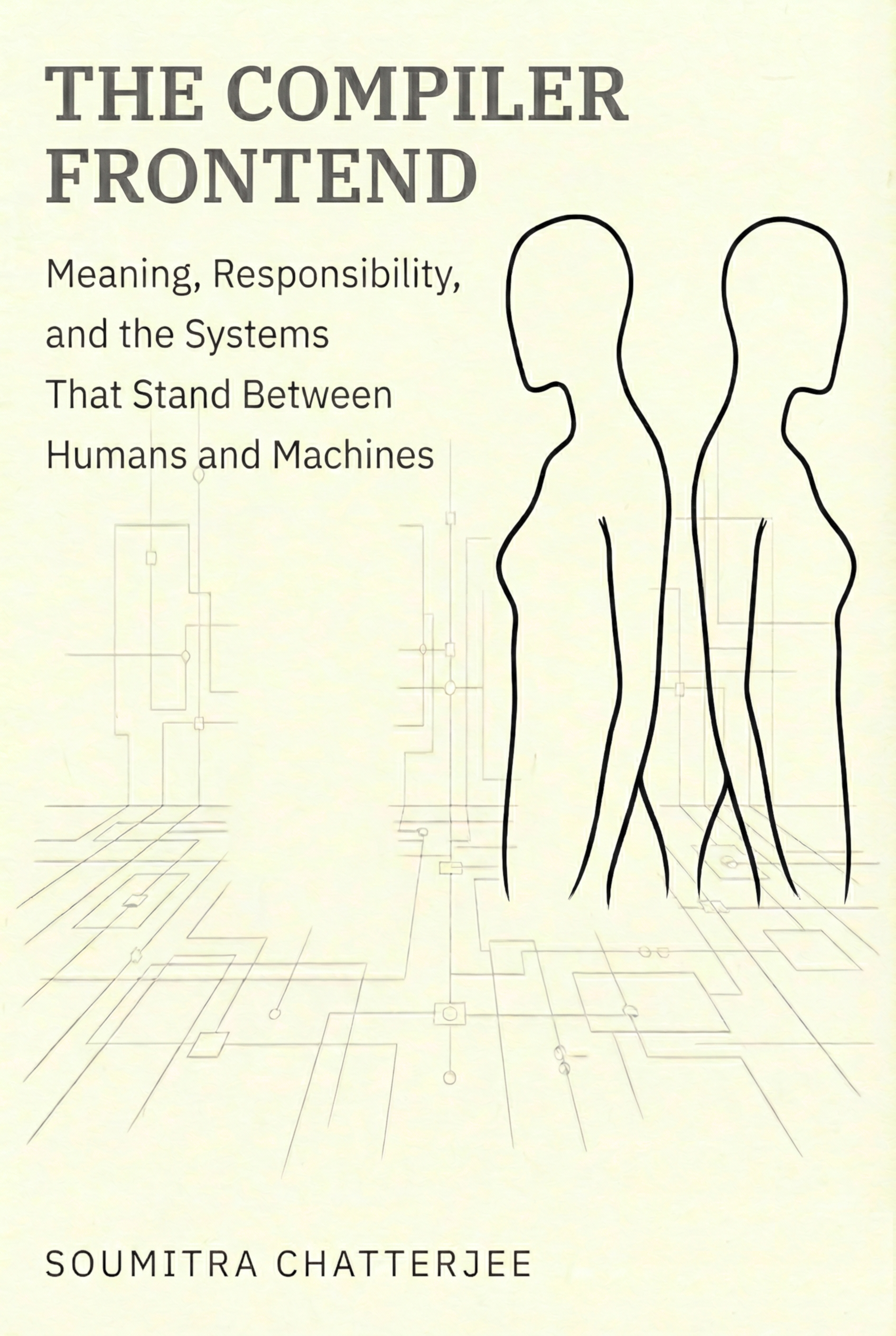
Cover of The Compiler Frontend by Soumitra Chatterjee

Technical Systems

The Compiler Frontend

The Compiler Frontend is not a language tutorial. It is not a syntax reference. And it is not a step-by-step guide to building a compiler.

It is an exploration of the responsibility, judgment, and architectural decisions that sit between human intent and machine execution. Written from the perspective of a practicing systems engineer, this book examines the compiler frontend as the most human-facing part of a compiler — the layer where meaning is interpreted, ambiguity is resolved, and design intent either survives or collapses.

Rather than focusing on algorithms alone, the book traces the deeper questions frontend engineers confront daily: what correctness really means, how errors should be represented, where responsibility ends, and how small design choices ripple through entire systems.

Across real-world examples and hard-earned lessons, it argues that many failures attributed to “backends,” “optimizers,” or “runtime behavior” originate much earlier — at the boundary where humans describe what they want and machines attempt to understand it.

For engineers who care not just about making code work, but about making systems trustworthy.
Cover of The Ceiling You Didn't Know Existed by Soumitra Chatterjee

Limits & Constraints

The Ceiling You Didn’t Know Existed

Most limits are accepted long before they are encountered. They arrive not as resistance from reality, but as conclusions drawn in advance — often confidently, sometimes proudly. What feels like realism is frequently something quieter: a decision made without contact.

The Ceiling You Didn’t Know Existed is not a book about motivation, discipline, or achieving more. It is a short, focused examination of how limits are misidentified — how assumptions harden into boundaries, and how systems are abandoned before they are allowed to respond.

Through a clear conceptual framework and two contrasting case studies — one professional, one personal — the book explores a recurring pattern: assumed limits replace discovered constraints, ambiguity is mistaken for evidence, and disengagement masquerades as maturity.

The argument is deliberately narrow. It does not offer steps, habits, or prescriptions. Instead, it names a mechanism that operates continuously, often below the threshold of notice, shaping decisions large and small through premature certainty.

This is not a book to skim for takeaways. It is a book to read carefully — and to notice oneself while reading. If it succeeds, it will not persuade or inspire. It will clarify.
Soumitra Chatterjee, author and systems software engineer

About the Author

Soumitra Chatterjee is a systems software engineer and writer based in Bengaluru, India, with more than two decades of experience building and enabling complex software systems at scale. His work is deeply grounded in compiler frontends, programming languages, and performance-critical system software, with extensive hands-on experience across production compilers, toolchains, and debugging infrastructure in enterprise and high-performance computing environments.

Over time, his work has expanded beyond core compiler engineering into broader software enablement — bridging platforms, ecosystems, and workloads where correctness, compatibility, and long-term maintainability matter as much as performance. His current focus spans system software and AI/ML enablement, helping modern workloads migrate, scale, and remain reliable across heterogeneous compute environments.

He is known for connecting low-level architecture and abstractions with real-world application needs, diagnosing hard problems across layers, and making complex systems usable and trustworthy over time. He is drawn to the quiet mechanics of systems — how they evolve, how they fail, and how they are rebuilt — and to the same question across domains as different as software and human behavior: how do untested conclusions become structural constraints?

His three books — Engineering the Self, The Compiler Frontend, and The Ceiling You Didn’t Know Existed — form a loose trilogy exploring systems, identity, and limits: not as obstacles to overcome, but as phenomena to be understood precisely.